
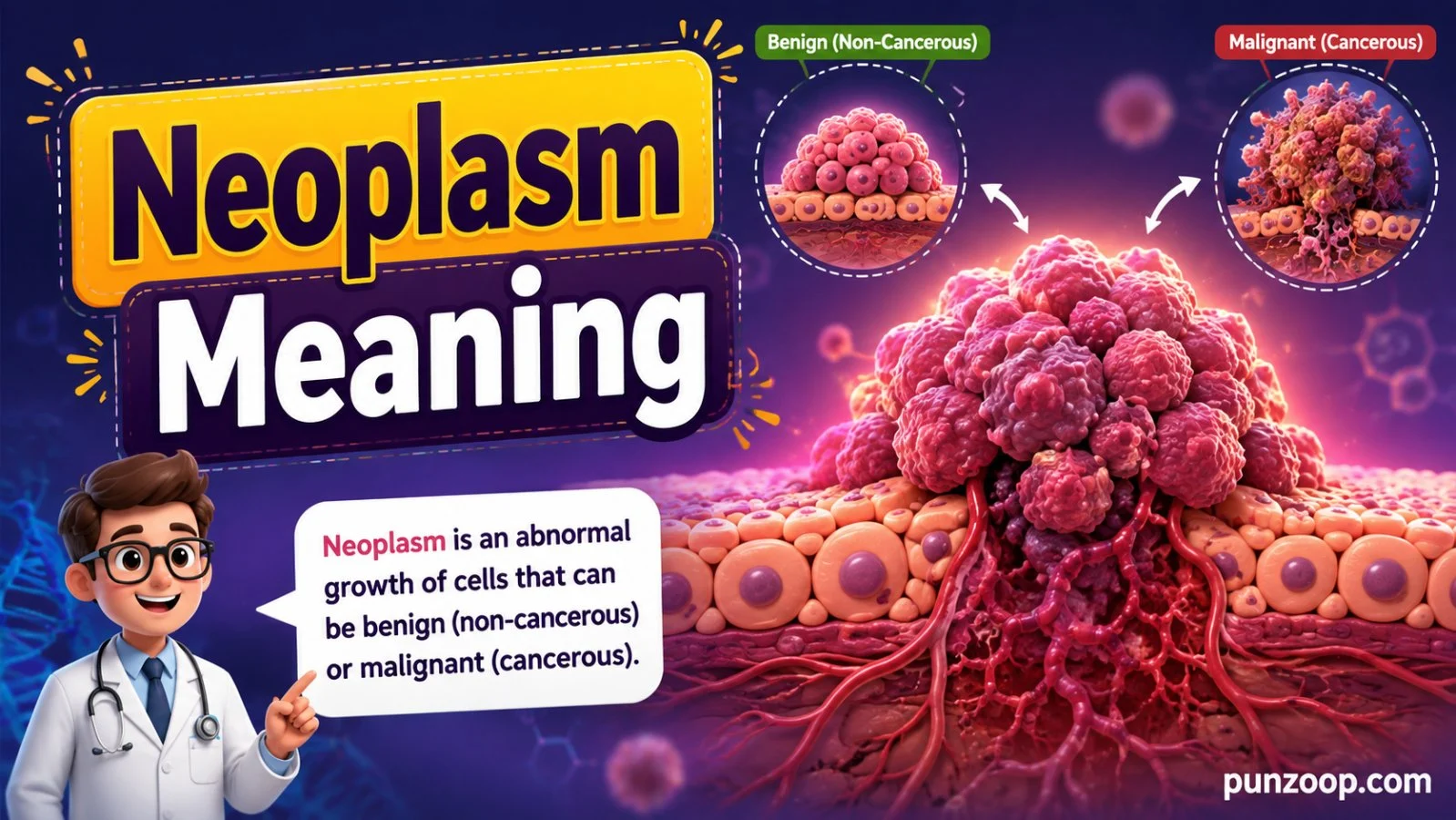
Hearing a word like neoplasm in a doctor’s report can feel scary. Your heart races. Your mind jumps to worst-case scenarios. You grab your phone and start typing “neoplasm meaning” into a search bar with shaky hands. 😟
Take a breath. You’re not alone, and you’re in the right place. The Neoplasm Meaning isn’t automatically a scary one in fact, most neoplasms are completely harmless. This word simply describes a specific kind of growth in the body, and understanding it can replace fear with clarity.
In this guide, we’ll break down everything in simple, human language no confusing medical jargon, no fear-mongering. Just clear facts, real examples, and practical answers you can actually use. Let’s get started. 🌱
What Is Neoplasm Meaning? The Simple Definition 📖
In the simplest terms, a neoplasm is an abnormal mass of tissue that forms when cells grow and divide more than they should, or don’t die when they normally would. The word comes from Greek roots: “neo” meaning “new,” and “plasm” meaning “formation” or “growth.” So literally, neoplasm means “new growth.”
Every day, your body makes new cells to replace old or damaged ones. This process is usually well-controlled, like a factory with strict quality checks. But sometimes, the controls break down. Cells start multiplying without the usual “stop” signals, and this uncontrolled cell growth is what doctors call a neoplasm.
“A neoplasm is essentially cell growth that has lost its normal brakes it doesn’t automatically mean cancer, but it does mean the body’s usual growth rules aren’t being followed.”
This is one of the most important things to understand early on: not all neoplasms are cancerous. We’ll dive deeper into this distinction shortly, because it changes everything about how worried (or not) you should be. 💡
Neoplasm Meaning: Neoplasm vs Tumor: Are They the Same Thing? 🤔
This is one of the most common mix-ups people search for online. Let’s clear it up once and for all.
In everyday language, people use “tumor” and “neoplasm” interchangeably, and honestly, in most contexts, that’s fine. But technically speaking, there’s a small difference:
- Neoplasm refers specifically to the abnormal, uncontrolled growth of cells — it’s about the biological process.
- Tumor originally just meant “swelling” and can refer to any lump, including ones caused by infection, inflammation, or fluid buildup not just abnormal cell growth.
Over time, medical usage has blended the two words together, so today, most tumors you hear about in a clinical setting are indeed neoplasms. Think of it this way: every neoplasm can appear as a tumor (a lump), but not every tumor is technically a neoplasm.
| Term | Meaning | Always a Growth of Abnormal Cells? |
| Neoplasm | Uncontrolled new cell growth | Yes |
| Tumor | Any swelling or lump | Not always |
Understanding this small distinction can help you read medical reports with a lot more confidence. 📝
Neoplasm Meaning: The Origin of the Word “Neoplasm” 🏛️
Language tells stories, and “neoplasm” tells a fascinating one. As mentioned earlier, it’s built from two Greek words:
- Neo — meaning “new”
- Plasma / Plasein — meaning “to form” or “to mold”
Doctors and scientists in the 19th century adopted this term as microscopes improved and researchers could finally see abnormal cell growth up close. Before this, people simply described lumps by how they looked or felt. Once science could examine tissue at a cellular level, a more precise term was needed and “neoplasm” fit perfectly because it described exactly what was happening: new, abnormal tissue formation. 🔬
Neoplasm Meaning: Types of Neoplasm: Benign vs Malignant 🧬
This is the heart of the entire topic, and honestly, the part that matters most if you or a loved one has just heard this word from a doctor. Neoplasms are broadly divided into two major categories.
1. Benign Neoplasms 🟢
A benign neoplasm is a non-cancerous growth. It grows slowly, stays in one place, and does not spread to other parts of the body. Think of it like a plant growing in a pot it might get bigger, but it stays contained within its boundaries.
Common examples of benign neoplasms include:
- Lipomas — soft fatty lumps under the skin
- Uterine fibroids — common growths in the uterus
- Adenomas — growths in glandular tissue, like certain thyroid nodules
- Skin moles (nevi) — usually harmless clusters of pigment cells
Benign neoplasms can still sometimes cause problems — for example, if they grow large enough to press against an organ or nerve — but they generally don’t threaten life the way cancerous growths can.
2. Malignant Neoplasms 🔴
A malignant neoplasm is what most people mean when they say “cancer.” These growths don’t respect boundaries. They can invade nearby tissue and, in more advanced stages, spread to distant parts of the body through the blood or lymphatic system — a process called metastasis.
Common examples include:
- Carcinomas — cancers starting in skin or tissue lining organs
- Sarcomas — cancers arising in bone, muscle, or connective tissue
- Leukemias — cancers of blood-forming tissue
- Lymphomas — cancers of the lymphatic system
3. Premalignant (or “In Situ”) Neoplasms 🟡
There’s actually a middle category many people don’t know about: premalignant neoplasms. These are abnormal cells that aren’t cancerous yet, but have the potential to become cancerous over time if left unmonitored. Catching these early is often considered a huge win in preventive healthcare. ✅
| Feature | Benign Neoplasm | Malignant Neoplasm |
| Growth speed | Usually slow | Often fast |
| Spreads to other areas? | No | Yes (can metastasize) |
| Cell appearance | Close to normal | Abnormal, irregular |
| Recurrence after removal | Rare | Possible |
| Life-threatening? | Rarely | Potentially, if untreated |
Neoplasm Meaning: What Causes a Neoplasm to Form? 🔍
There’s no single cause behind every neoplasm — it’s usually a mix of factors working together. Here are some of the most well-recognized contributors:
- Genetic mutations — errors in DNA that disrupt normal cell control
- Inherited genes — some families carry genes that raise neoplasm risk
- Environmental exposure — pollutants, radiation, or certain chemicals
- Lifestyle factors — smoking, excessive alcohol use, poor diet
- Chronic inflammation — long-term irritation of tissue
- Viral infections — certain viruses are linked to specific cancers
- Hormonal imbalances — especially relevant in reproductive tissue growths
- Age — cell repair mechanisms naturally weaken over time
It’s important to remember: having one or more of these risk factors doesn’t guarantee you’ll develop a neoplasm. It simply means the odds are slightly higher, which is exactly why regular checkups matter. 🩹
Neoplasm Meaning: Common Symptoms Associated With Neoplasms ⚠️
Symptoms vary hugely depending on where the neoplasm is located and whether it’s benign or malignant. That said, here are general warning signs doctors often recommend watching for:
- A new lump or swelling that doesn’t go away
- Unexplained weight loss
- Persistent fatigue that doesn’t improve with rest
- Changes in skin, moles, or pigmentation
- Unusual bleeding or discharge
- Difficulty swallowing or persistent indigestion
- A nagging cough or hoarseness that won’t clear up
- Changes in bowel or bladder habits
Important note: These symptoms can also point to dozens of harmless, everyday conditions. Having one of them doesn’t mean you have a neoplasm — but it does mean it’s worth mentioning to your doctor. 👩⚕️
Neoplasm Meaning: How Are Neoplasms Diagnosed? 🧪
Modern medicine has come a long way in detecting and identifying neoplasms early. Here’s a general overview of the diagnostic journey:
1. Physical Examination
Doctors often start by simply feeling for lumps, checking size, texture, and mobility of any growth.
2. Imaging Tests
Tools like ultrasounds, CT scans, MRIs, and X-rays help visualize the size, shape, and location of a neoplasm without invasive procedures.
3. Biopsy
This is considered the gold standard. A small tissue sample is taken and examined under a microscope by a pathologist to determine whether the cells are benign, premalignant, or malignant.
4. Blood Tests and Tumor Markers
Certain substances in the blood can rise when specific types of neoplasms are present, helping guide further investigation.
The combination of these tools gives doctors a much clearer picture than any single test alone. 🔎
Treatment Options for Neoplasms 💊
Treatment depends heavily on whether a neoplasm is benign or malignant, along with its size, location, and how it’s affecting the body.
For Benign Neoplasms
- Watchful waiting — regular monitoring if it’s not causing problems
- Surgical removal — if it’s large, painful, or pressing on nearby structures
- Medication — in some cases, to shrink or manage the growth
For Malignant Neoplasms
- Surgery — removing the tumor and sometimes surrounding tissue
- Chemotherapy — using drugs to kill or slow cancer cell growth
- Radiation therapy — targeting cancer cells with focused energy
- Immunotherapy — helping the immune system fight abnormal cells
- Targeted therapy — drugs designed to attack specific cell mutations
Treatment plans today are often highly personalized, based on genetic testing, the exact type of neoplasm, and the patient’s overall health. This is a huge shift from decades past, when treatment was far more one-size-fits-all. 🌟
Can Neoplasms Be Prevented? 🛡️
While there’s no guaranteed way to prevent every type of neoplasm, research consistently points to a few habits that lower overall risk:
- Avoiding tobacco products
- Limiting alcohol consumption
- Eating a diet rich in fruits, vegetables, and fiber
- Staying physically active
- Protecting skin from excessive UV exposure
- Getting recommended vaccines (like HPV, linked to certain cancers)
- Attending regular health screenings appropriate for your age
None of these guarantee complete protection, but together, they create a strong foundation for long-term health. Small, consistent choices really do add up over time. 🌿
Living With a Neoplasm Diagnosis: Emotional Wellbeing Matters Too ❤️
A diagnosis — even a benign one — can trigger anxiety, fear, or a flood of “what ifs.” This emotional side of the experience deserves just as much attention as the physical side.
Here are a few gentle reminders that patients and caregivers often find helpful:
- Ask your doctor to explain results in plain language — you deserve clarity
- Bring someone you trust to appointments for support
- Join support communities, online or in-person
- Give yourself permission to feel scared without spiraling into worst-case thinking
- Remember that many neoplasms are treatable, manageable, or entirely harmless
Healthcare isn’t just about the body — it’s about the whole person. Don’t underestimate the power of a strong support system during uncertain times. 🤝
Neoplasm Meaning in Everyday Medical Reports 📋
If you’ve spotted the word “neoplasm” on a lab report or scan result, here’s a quick decoder:
| Report Phrase | What It Generally Suggests |
| “Benign neoplasm” | Non-cancerous growth, usually low concern |
| “Neoplasm, uncertain behavior” | More testing needed to classify it clearly |
| “Malignant neoplasm” | Cancerous growth requiring treatment planning |
| “In situ neoplasm” | Early-stage abnormal cells, not yet invasive |
Always remember: a report is just one piece of the puzzle. Your doctor will interpret it alongside your symptoms, history, and other test results before drawing conclusions. 🧩
FAQs:
1. Does neoplasm always mean cancer?
No. A neoplasm simply means abnormal new cell growth. It can be benign (non-cancerous), premalignant, or malignant (cancerous). Most neoplasms found during routine checkups turn out to be benign.
2. Is a cyst the same as a neoplasm?
Not exactly. A cyst is typically a fluid-filled sac, while a neoplasm is a solid mass of abnormal cell growth. However, some cysts can develop within or alongside neoplastic tissue, so doctors evaluate them individually.
3. Can a benign neoplasm turn into a malignant one?
In rare cases, yes — certain benign growths can undergo changes over time and become malignant. This is exactly why doctors often recommend monitoring, even for non-cancerous findings.
4. How common are neoplasms?
Extremely common. Many people develop benign neoplasms like lipomas, moles, or fibroids at some point in their lives without ever realizing it, since these often cause no symptoms at all.
5. What should I do if my report mentions a neoplasm?
Stay calm and schedule a follow-up with your doctor to understand the specific type, size, and recommended next steps. Most neoplasms are manageable, especially when identified early.
Final Thoughts:
At its core, the Neoplasm Meaning is far less frightening than it first sounds. It simply describes new, abnormal cell growth something that can be completely harmless or, in some cases, more serious. The key is understanding which category applies to your specific situation, and that’s exactly what your healthcare provider is there to help you figure out.
Knowledge really is power here. The more you understand medical terms like this one, the more confident and calm you’ll feel navigating your own health journey — or supporting someone you love through theirs. 💪