
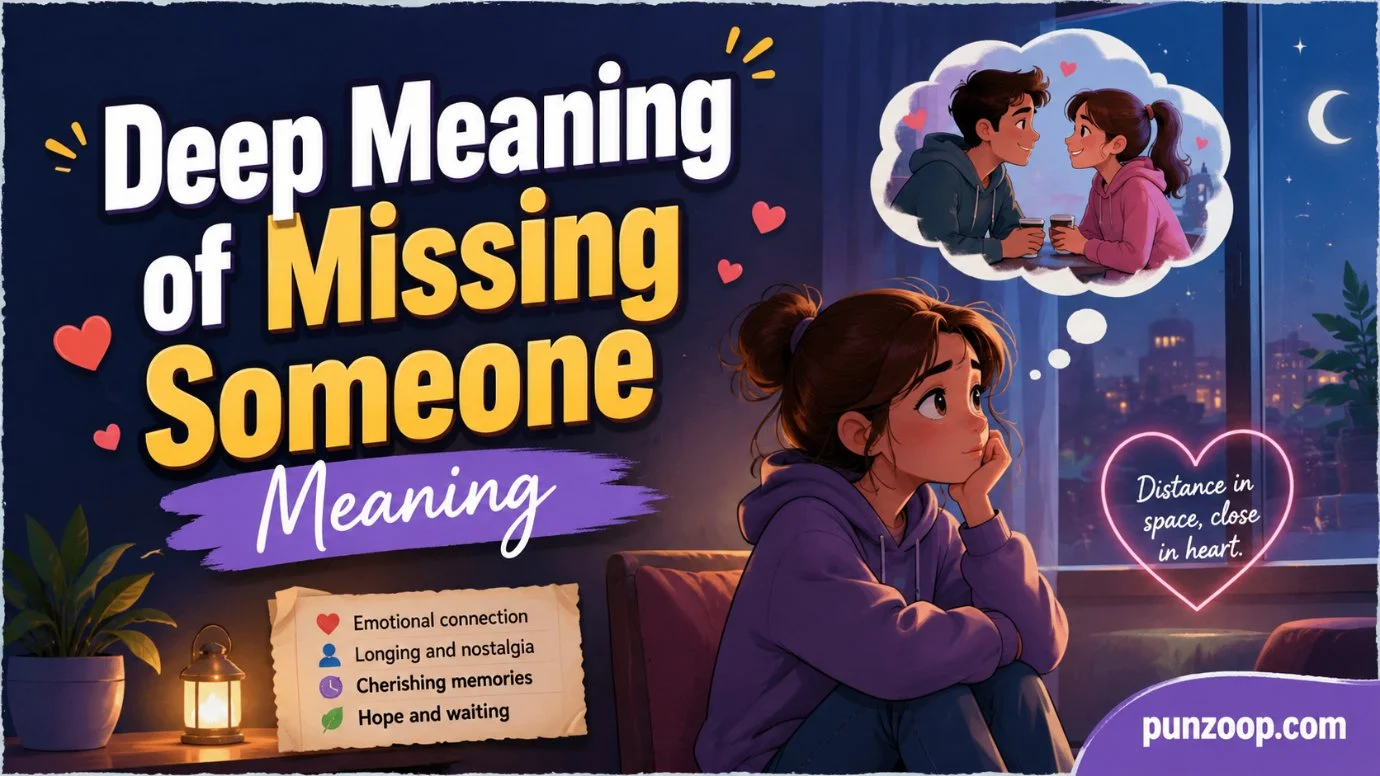
Have you ever been sitting in a quiet room, doing absolutely nothing important, when suddenly a wave of longing hits you out of nowhere? 💭 Your chest tightens a little. Your mind drifts to a face, a voice, a laugh you haven’t heard in a while. That’s the deep meaning of missing someone showing up uninvited — and it’s one of the most universal, most human experiences there is.
Missing someone isn’t just a passing feeling. It’s a complex emotional signal built from memory, attachment, love, and identity. Whether it’s a partner who’s far away, a friend who’s drifted apart, or someone you’ve lost forever, that ache carries meaning far deeper than simple sadness. In this article, we’ll unpack exactly why we miss people, what it says about our emotional wiring, and how to hold that feeling in a healthy way. 🧠❤️
What Does It Really Mean When You Miss Someone? 🤔
At its core, missing someone means your brain and heart are recognizing an absence — a gap between how things are and how you wish they were. It’s not weakness. It’s not “being too emotional.” It’s actually your nervous system doing exactly what it evolved to do.
Humans are social creatures. From an evolutionary standpoint, staying close to the people who kept us safe — family, crew, partners — was a matter of survival. So when someone important isn’t near us, our brain treats it almost like a mild alarm system. That “missing” feeling is your mind saying: “This person matters. Go find a way back to them.”
“To love is to miss someone when they’re not there, and to feel whole again when they are.” — Unknown
The Psychology Behind Missing Someone 🧩
Psychologists often connect the experience of missing someone to attachment theory, first developed by John Bowlby in the mid-20th century. According to this theory, humans form emotional bonds — called attachments — with people who provide comfort, safety, and connection. When that person is absent, the brain registers a kind of “attachment gap.”
Here’s what typically happens inside your mind and body when you miss someone:
- 🧠 The brain’s reward system quiets down — dopamine linked to that person’s presence drops
- 💓 Cortisol (stress hormone) may rise slightly, creating restlessness or a heavy feeling
- 🖼 Memory centers become more active, replaying moments and conversations
- 🕰 A sense of time distortion — days can feel longer when someone is absent
This is why missing someone can feel almost physical — a tightness in the chest, a lump in the throat, or that hollow “something’s missing” sensation.
Why Do We Miss People So Intensely? 💔
Not all “missing” feels the same. The intensity usually depends on a few key factors:
| Factor | How It Affects the Feeling |
|---|---|
| Depth of the bond | Closer relationships create stronger neural and emotional imprints |
| Length of connection | Longer shared history means more memory triggers |
| How the separation happened | Sudden or unresolved goodbyes intensify longing |
| Your current emotional state | Stress or loneliness can amplify missing someone |
| Uncertainty about reunion | Not knowing “when” or “if” you’ll reconnect deepens the ache |
This explains why you might miss a childhood best friend and a recent breakup partner in completely different ways — even though both feelings are valid and real.
The Difference Between Missing Someone and Grieving Someone ⚖️
It’s worth noting that missing and grieving are related but not identical. Missing someone often implies the possibility of reconnection — a phone call, a visit, a reunion. Grief, on the other hand, usually involves accepting a permanent absence, such as after a loss.
Still, both share overlapping emotional territory: longing, memory, and love that hasn’t found a place to “land.” Understanding which one you’re experiencing can help you choose the right coping approach.
Common Reasons People Miss Someone 🌱
1. Emotional Attachment and Bonding
When you spend meaningful time with someone, your brain builds an emotional map of them — their voice, their humor, their presence. When they’re gone, that map still exists, and your mind keeps “checking” for them.
2. Shared Memories and Routines
Missing someone often gets triggered by routine disruption. If you used to talk every evening or grab coffee every Friday, the absence of that ritual becomes a daily reminder.
3. Unfinished Emotional Business
Sometimes we miss people because there’s something left unsaid — an apology, a “thank you,” or simply more time we wish we’d had.
4. Fear of Losing Connection Permanently
Missing someone can also stem from anxiety about the relationship’s future — worrying that distance, time, or circumstances might change things forever.
Is Missing Someone a Sign of Love? 💗
Not always — but often, yes. Missing someone is usually a sign that the relationship held real emotional value to you. It doesn’t have to be romantic love; you can deeply miss a parent, a mentor, a childhood friend, or even a pet.
That said, missing someone isn’t automatically proof of a healthy relationship. Sometimes we miss people who weren’t good for us — because our brain remembers the good moments more vividly than the painful ones. This is sometimes called nostalgia bias.
The Spiritual and Emotional Symbolism of Missing Someone ✨
Beyond psychology, many cultures and spiritual traditions view missing someone as a reflection of connection beyond distance. The idea that “if you’re thinking of them, maybe they’re thinking of you too” speaks to a shared human belief: that love and longing can exist even when two people are physically apart.
Some see missing someone as a quiet reminder to appreciate presence — a nudge to value people while they’re near, and to nurture connection intentionally rather than taking it for granted.
How Missing Someone Shows Up in Daily Life 📅
Missing someone doesn’t always look like crying or sadness. It often shows up in subtle, everyday ways:
- 📱 Reaching for your phone to text them, then stopping
- 🎵 A song comes on and suddenly you’re thinking of them
- 🍽 Cooking a meal they loved and feeling a pang of nostalgia
- 🛏 Noticing the “quiet” in a space they used to fill
- 😶 Starting a sentence with “I wish I could tell them…”
These small moments are completely normal and are part of how the human brain processes attachment and absence.
Healthy Ways to Cope With Missing Someone 🌿
While missing someone is natural, it’s important to handle that feeling in ways that support your wellbeing rather than deepen distress. Here are some grounded, healthy approaches:
1. Acknowledge the Feeling Instead of Suppressing It
Trying to “push away” the feeling of missing someone often makes it stronger. Instead, allow yourself to sit with it briefly, name it (“I miss them”), and let it pass through you.
2. Reconnect When Possible
If the relationship allows it, reach out. A short message, a call, or a simple “thinking of you” can ease the ache and strengthen the bond.
3. Create New Positive Memories
Engaging in new experiences — with other people or on your own — helps balance out the emotional weight of longing with fresh, present-moment joy.
4. Journal Your Feelings
Writing down what you miss and why can bring clarity and often reveals what you truly need — whether it’s connection, closure, or simply comfort.
5. Practice Gratitude for the Relationship
Instead of focusing only on the absence, try appreciating that the relationship existed at all. “I’m grateful I got to know them” can soften the sharpness of missing someone.
When Missing Someone Becomes Overwhelming 🚩
For most people, missing someone comes in waves and eventually softens with time, connection, or new routines. However, if the feeling becomes constant, interferes with daily functioning, or is tied to a significant loss, it can help to talk to a trusted friend, family member, or a mental health professional who can offer personalized support.
Missing Someone vs. Being Lonely: Are They the Same? 🔍
These two feelings often get mixed up, but they’re different:
| Missing Someone | Loneliness |
|---|---|
| Tied to a specific person | General lack of connection |
| Triggered by memories or reminders | Can happen even around people |
| Eases with reconnection to that person | Eased by any meaningful social contact |
Understanding this distinction can help you respond to the feeling more accurately — sometimes you don’t need “someone,” you need “that someone.”
How Different Relationships Shape the Meaning of Missing Someone 👨👩👧👦
Missing a Partner
Romantic longing often blends emotional and physical closeness — you may miss their touch, their voice, and the sense of being “chosen” by them.
Missing a Friend
Friendship-based missing tends to center around shared laughter, comfort, and being understood without needing to explain yourself.
Missing a Family Member
This often carries a sense of roots and identity — missing family can feel like missing a piece of where you come from.
Missing Someone Who Has Passed Away
This form of missing intertwines with grief and can resurface unexpectedly for years, often tied to anniversaries, holidays, or small everyday triggers.
👉 If you’re navigating a difficult loss, you may also find comfort in reading Coping With Grief and Loss for additional guidance.
Turning Missing Someone Into Something Meaningful 🌷
Rather than viewing the ache of missing someone purely as pain, many people find it helpful to reframe it as proof of connection. The feeling exists because love, friendship, or bond existed first. In that sense, missing someone can become a quiet form of honoring the relationship — a reminder that it mattered, and still does.
FAQs:
1. Why do I miss someone even though we’re not officially together?
Emotional attachment doesn’t require an official label. If you shared closeness, vulnerability, or meaningful time together, missing them is a natural emotional response.
2. Is it normal to miss someone who hurt me?
Yes, it’s common. The brain often remembers positive moments more strongly, which is why you might miss someone even after a painful relationship ended.
3. How long does missing someone usually last?
There’s no fixed timeline. It depends on the depth of the bond, how the separation happened, and your personal coping process. For some, it fades in weeks; for others, it resurfaces occasionally for years.
4. Can missing someone too much be unhealthy?
Missing someone is healthy in moderation, but if it consistently disrupts daily life, sleep, or wellbeing, it may help to talk with someone you trust or a mental health professional.
5. Does missing someone mean I should reach out to them?
Not necessarily. It depends on the relationship’s context and whether reconnecting would be healthy for both people involved. Sometimes sitting with the feeling — without acting on it — is the healthier choice.
Final Thoughts:
Missing someone is one of the clearest signs that love, connection, and memory leave a lasting mark on us. It’s not a flaw or a weakness — it’s evidence that a bond mattered enough to leave a trace in your heart and mind. Whether it’s a partner, a friend, a family member, or someone no longer here, that quiet ache is simply love with nowhere to go in the moment.
The next time that familiar pang of longing shows up, try not to push it away. Let it remind you of what — and who — truly matters in your life.