
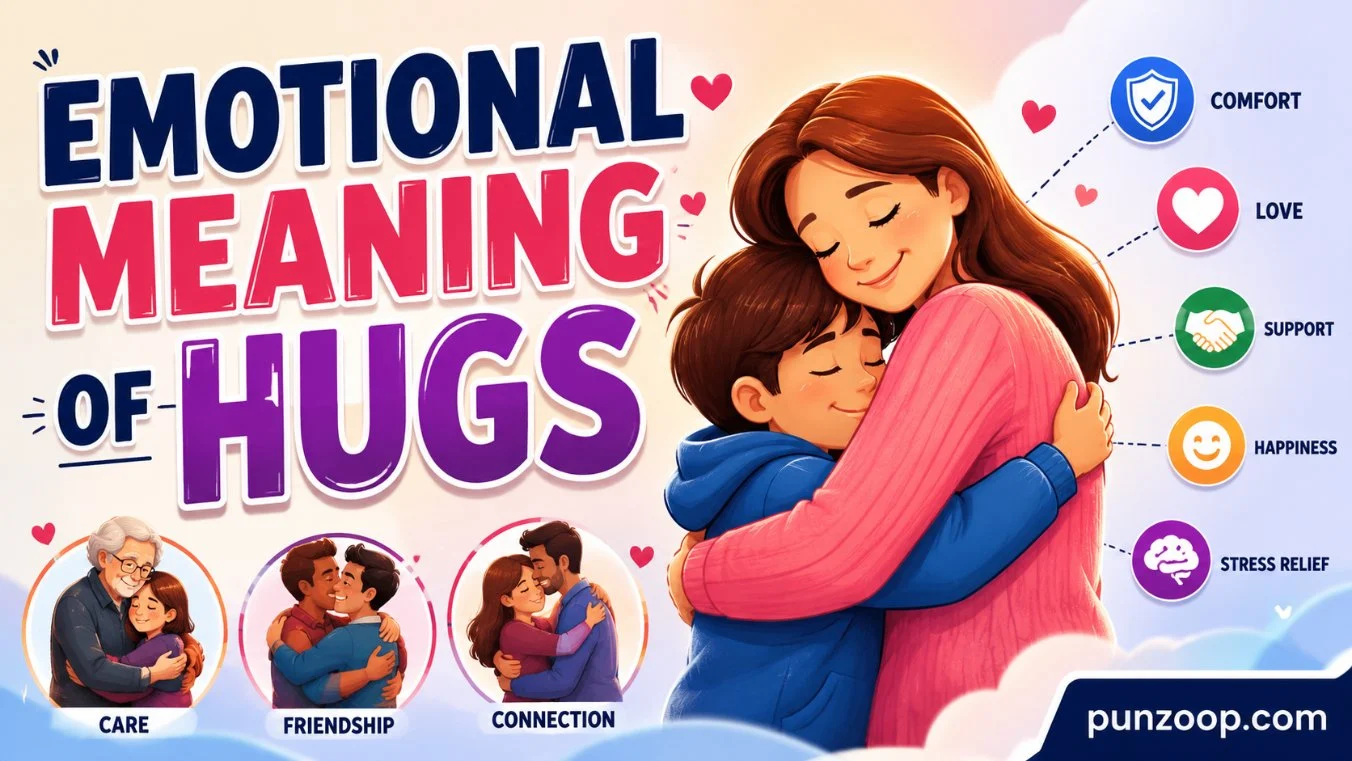
Have you ever walked into a room feeling completely drained, and then someone wrapped their arms around you — and suddenly, the weight on your chest felt just a little lighter? That’s not a coincidence. That’s the emotional meaning of hugs working quietly beneath the surface of one of humanity’s oldest, simplest gestures. 💞
A hug takes less than ten seconds, yet it can calm a racing heart, dissolve tension, and say “I’m here” in a way that no sentence ever could. In a world that’s increasingly digital, fast-paced, and emotionally distant, understanding why hugs feel good and what they truly communicate has never been more important. This article dives deep into the psychology, biology, culture, and everyday power of the hug — so buckle up, because you’re about to see this everyday gesture in a completely new light. 🌍
What Is the Emotional Meaning of Hugs? 🧠
At its core, a hug is a form of non-verbal communication. It’s the body’s way of expressing emotions that words often fail to capture — comfort, love, gratitude, apology, celebration, or grief. When you hug someone, you’re not just making physical contact; you’re sending a message straight to their nervous system that says, “You are safe. You are seen. You are not alone.”
Psychologists describe hugging as a form of attachment behavior, rooted in the same emotional systems that bond parents to children. This is why a hug from someone you trust can feel more reassuring than an entire conversation. It bypasses the analytical brain and speaks directly to the emotional one. 💗
“We are wired for connection — it’s in our biology. Touch is our first language, and long after words fail us, it remains the one language we never forget.” — a common sentiment among relationship psychologists
The Origin of Hugging: Where Did This Gesture Come From? 🕰️
Hugging isn’t a modern invention — it’s ancient, primal, and deeply woven into our evolutionary story. Researchers who study animal behavior point out that primates, our closest biological relatives, use embracing gestures to comfort each other after conflict, celebrate reunions, and strengthen social bonds within their groups.
For early humans, physical closeness wasn’t just emotional — it was survival. Infants who were held, touched, and embraced were more likely to be protected, fed, and nurtured. Over thousands of years, this survival instinct evolved into the emotional ritual we now recognize as the hug — a gesture that today crosses nearly every culture on Earth, even if the customs around it differ. 🌏
The Science Behind Why Hugs Feel So Good 🔬
There’s real biology behind that warm, fuzzy feeling you get during a good hug. When you embrace someone, your brain releases a cocktail of feel-good chemicals:
- Oxytocin 🌸 — often called the “bonding hormone,” it deepens feelings of trust and closeness.
- Serotonin ☀️ — helps stabilize mood and creates a sense of well-being.
- Dopamine ✨ — the brain’s reward chemical, reinforcing the pleasure of connection.
- Cortisol reduction 🧘 — hugging has been linked to lower stress hormone levels, easing anxiety.
This is why even a short hug can shift your entire emotional state. Your heart rate slows, your blood pressure steadies, and your body physically registers that it’s safe to relax. It’s not just poetic — it’s physiological. 💓
The Role of the Vagus Nerve
The vagus nerve, which runs from your brain to your gut, plays a huge role in regulating your emotional state. Gentle, sustained pressure — like the kind you get from a warm hug — can stimulate this nerve and trigger what’s known as the “relaxation response,” pulling your body out of fight-or-flight mode and into a calmer, more grounded state.
Types of Hugs and What They Emotionally Represent 🤝
Not all hugs are created equal. The type, duration, and intensity of a hug can completely change its emotional message. Here’s a breakdown:
| Type of Hug | Emotional Meaning | Common Context |
|---|---|---|
| The Quick Side Hug | Friendly, casual, respectful distance | Coworkers, acquaintances |
| The Bear Hug | Protection, warmth, deep affection | Close friends, family |
| The Lingering Embrace | Comfort, emotional support, healing | Grief, breakups, reunions |
| The Back-Pat Hug | Politeness with emotional guarding | Formal or new relationships |
| The Full-Body Embrace | Deep trust, romantic or platonic intimacy | Partners, best friends, family reunions |
Notice how duration changes everything. A hug held for just three seconds may feel polite, while one held for ten or more seconds tends to feel emotionally significant — almost like a silent conversation happening between two bodies. ⏳
Hugs as Emotional Healing Tools 🩹
One of the most powerful — and often overlooked — aspects of hugging is its role in emotional recovery. Grief, anxiety, heartbreak, and stress don’t always respond well to logic or advice. Sometimes, what a person needs isn’t a solution — it’s simply to be held.
Therapists who work with trauma and grief often emphasize that physical comfort, when welcomed, can ground a person in the present moment. A hug interrupts spiraling thoughts by anchoring the nervous system in physical sensation — the warmth of another body, the steady rhythm of breathing, the gentle pressure of arms around you.
Hugs During Grief
During loss, words often feel hollow. “I’m sorry for your loss” can only go so far. A silent, sincere hug communicates empathy in a way language simply cannot replicate. It says: “I don’t have the answers, but I’m here, and you don’t have to carry this alone.” 🕊️
Hugs and Anxiety Relief
For people experiencing anxiety, a firm, grounding hug can act almost like a natural weighted blanket — offering deep pressure stimulation that helps calm an overstimulated nervous system.
The Cultural Dimension of Hugging 🌐
While hugging feels universal, its meaning shifts dramatically depending on culture. In some Mediterranean and Latin American cultures, hugging is a natural, frequent greeting — even among new acquaintances. In many East Asian cultures, physical touch in public is more reserved, with bowing or verbal greetings often preferred over embraces.
This doesn’t mean hugging means less in reserved cultures — it often means more, because it’s reserved for closer, more meaningful relationships. Understanding this cultural nuance is essential, especially in our increasingly connected, multicultural world. 🌏
Hugs in Romantic Relationships 💑
In romantic partnerships, hugging plays a role far beyond affection — it’s a form of emotional maintenance. Couples who regularly embrace tend to report feeling more secure, connected, and supported in their relationship. A hug after a long day, before an argument, or during a stressful moment can de-escalate tension before words even need to be exchanged.
Interestingly, the “20-second hug” is often cited by relationship experts as a benchmark for triggering deeper oxytocin release — long enough to move past the polite, social hug and into a genuinely bonding embrace. 🥰
Hugs and Family Bonds 👨👩👧👦
From infancy, touch shapes how we form attachments. Children who grow up in physically affectionate households often develop stronger emotional regulation skills and a greater sense of security. A parent’s hug after a scraped knee or a hard day at school does more than comfort — it teaches a child that their emotions are valid and that support is always within reach.
As families grow and change, hugs remain one of the few gestures that transcend age. A hug between a parent and their adult child still carries that same childhood reassurance — proof that some forms of comfort never expire. 🏡
Hugs in Friendship: An Underrated Bond 🧑🤝🧑
Friendship hugs are often dismissed as casual, but they carry real emotional weight. A hug from a close friend after good news amplifies joy, while a hug after bad news softens the blow. Friendships thrive on these small physical affirmations of care — they build trust incrementally, hug by hug, over years of shared experience.
If you’re exploring how physical affection strengthens different relationships, check out this related read: Related Article for a deeper look at nonverbal bonding.
When Hugs Aren’t Wanted: Respecting Boundaries 🚫
As powerful as hugs are, they are not universally welcome — and that matters. Some people are not naturally “touch-oriented,” may have experienced trauma, or simply prefer other forms of affection like words or acts of service. Consent is just as important in physical affection as it is in any other interaction.
A hug offered without genuine welcome doesn’t provide comfort — it can create discomfort or even distress. The healthiest approach is always to read body language, ask when in doubt, and respect a person’s right to decline. 🙏
How to Give a Meaningful, Emotionally Present Hug 🤍
Not all hugs land the same way — presence matters. Here’s how to make your hugs emotionally impactful:
- Be fully present — put your phone away, make eye contact first.
- Hold a little longer — three seconds feels polite; eight to ten feels meaningful.
- Match their energy — a firm hug for comfort, a gentle one for grief.
- Let go slowly — an abrupt release can feel dismissive.
- Speak softly, if at all — sometimes silence communicates more than words.
Hugs and Physical Health: More Than Just Emotional Benefits 🌿
Beyond emotional comfort, regular affectionate touch has been associated with several physical health benefits, including a stronger immune response, better sleep quality, and lower resting blood pressure. Essentially, the body treats warm human connection as a form of medicine — one with no side effects and zero cost. 💊🚫
Hugs in the Digital Age: Are We Losing Touch? 📱
With more of our communication happening through screens, genuine physical affection is becoming rarer — and arguably, more valuable than ever. Text messages and emojis can convey affection, but they can’t replicate the physiological calming effect of an actual embrace. This growing “touch gap” is one reason many people report feeling lonelier despite being more digitally “connected” than any generation before them.
Making a conscious effort to hug loved ones — intentionally, not just habitually — can be a small but powerful act of resistance against digital disconnection. 💻➡️❤️
Self-Hugging and Self-Soothing: Can You Hug Yourself? 🫂
Interestingly, self-administered touch — like wrapping your own arms around yourself or placing a hand over your heart — can also trigger a mild calming response. While it’s not a full substitute for human connection, it’s a useful, accessible tool for moments when comfort from others isn’t immediately available.
Final Thoughts: The Quiet Power of a Hug 🌟
At the end of the day, a hug is so much more than a physical gesture — it’s a bridge between two nervous systems, a wordless promise of safety, and one of the purest forms of human empathy we have. Whether it’s celebrating a win, softening a loss, or simply saying “I see you,” the emotional meaning of hugs runs far deeper than most of us ever pause to consider.
In a world that often feels rushed and disconnected, don’t underestimate the quiet power of opening your arms. Sometimes, that’s all another person needs. 🤗
FAQs:
1. Why do hugs make us feel emotionally better?
Hugs trigger the release of oxytocin, serotonin, and dopamine while lowering cortisol, creating a natural calming and bonding effect on the brain and body.
2. How long should a hug last to feel meaningful?
Many relationship experts point to around 20 seconds as the threshold where a hug shifts from polite to genuinely bonding, though even 6–8 seconds can trigger a noticeable emotional shift.
3. Is it normal to not like hugging?
Yes, completely. Comfort with physical touch varies by personality, upbringing, and personal experience. Preferring other forms of affection doesn’t make someone less caring.
4. Can hugging really reduce stress and anxiety?
Yes — physical touch, especially sustained embraces, can activate the vagus nerve and lower cortisol levels, helping the nervous system shift out of a stressed state.
5. Do hugs mean the same thing in every culture?
No. While the emotional intent behind hugging is often similar, the frequency and social acceptability of hugging varies significantly across cultures.
Final Thoughts 📝
The emotional meaning of hugs goes far beyond a simple social custom — it’s a biological, psychological, and deeply human act of connection. From soothing grief to strengthening romantic bonds, from comforting a child to grounding an anxious mind, hugs quietly do what words often cannot. Understanding this makes every embrace a little more intentional — and a lot more meaningful. 💗
💌 Enjoyed this article? Explore more heartfelt insights on connection and emotional well-being — check out our Related Article for more on the language of touch and human bonding. Don’t forget to share this with someone who could use a reminder that they’re not alone. 🤗