Picture this: you walk into a cozy little café, the smell of freshly ground beans wrapping around you like a warm blanket, and you spot an unfamiliar word on the chalkboard menu “Cortado.” ☕You pause. You squint. You wonder, “What on earth is a cortado, and how do I even say it?” If that sounds like you, take a deep breath, because you’re about to become the most coffee-savvy person in your friend group☕.
The cortado meaning is simpler than it looks it’s a small, balanced coffee drink made by “cutting” strong espresso with a little warm milk. But the story behind this humble cup runs much deeper than a definition. It’s a tale of Spanish tradition, Cuban warmth, and a modern coffee culture that’s fallen head over heels for this perfectly balanced brew. In this guide, we’re going to unpack everything the origin, the taste, the ratios, the differences from a latte or macchiato, and even how you can make one in your own kitchen. Grab your favorite mug, and let’s dive in! 🚀
What Does Cortado Mean? (Origin of the Word) 📖
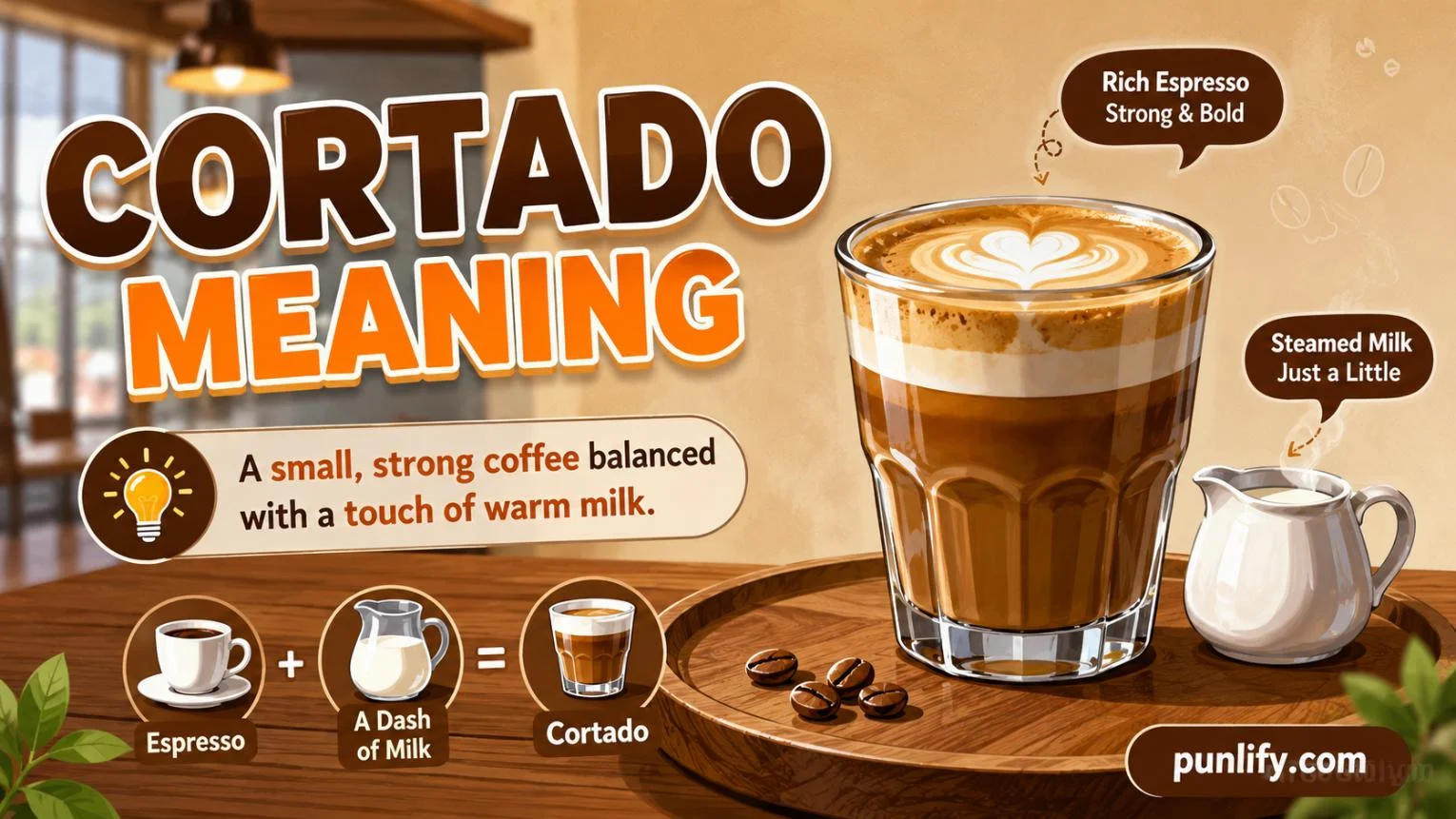
Let’s start with the basics, because understanding a word’s roots always makes it stick better in your memory. The term “cortado” comes from the Spanish verb cortar, which means “to cut.” In coffee terms, this doesn’t mean anything is being sliced with a knife it simply means the intense, bold flavor of espresso is being “cut” or softened with a small amount of steamed milk.
So when someone asks, “What is the cortado meaning?” the short, honest answer is: a coffee where milk gently tames the sharp edge of espresso, without drowning it out. Unlike a latte, which is milk-heavy, or a plain espresso, which can taste quite intense, the cortado sits perfectly in the middle. It’s the Goldilocks of coffee drinks not too strong, not too milky, just right. 🐻☕
“A cortado isn’t about hiding the espresso. It’s about letting the coffee speak, just in a slightly softer voice.” a sentiment shared by baristas across specialty coffee shops worldwide.
The History and Origin of the Cortado ☕🇪🇸
Every great coffee drink has a story, and the cortado’s journey is a rich blend of geography, migration, and culture. Understanding where it came from helps you appreciate why it tastes the way it does — and why coffee lovers around the globe have embraced it so passionately.
Spanish Roots: Where It All Began
The cortado is widely believed to have originated in Spain, particularly in regions like the Basque Country and Andalusia. Spanish coffee culture has always leaned toward small, strong shots of espresso enjoyed quickly, often while standing at a bar counter chatting with a neighbor. Milk was added not to create a milky drink, but to soften the bite of the espresso just enough to make it easier to sip slowly and enjoy the moment.
In traditional Spanish cafés, you’ll often hear the drink ordered simply as “un cortado, por favor” and it usually arrives in a small glass, not a mug, showing off the beautiful contrast between the dark espresso and the pale milk layered on top. 🥃
The Cuban Cortadito: A Sweet Twist
Travel across the Atlantic to Cuba, and you’ll find a delicious cousin of the cortado called the cortadito. This version takes the same espresso-and-milk concept but adds a generous amount of sugar, often whipped directly into the espresso shot before the milk is added, creating a frothy, caramel-colored layer on top. It’s sweeter, bolder, and deeply tied to Cuban-American coffee culture, especially in cities like Miami. 🌴
This is a great example of how one simple idea cutting espresso with milk traveled across oceans and transformed based on local taste, culture, and available ingredients. That’s the beauty of coffee traditions; they evolve, but they never forget their roots.
What Is a Cortado Coffee, Exactly? ☕🔍
Now that we’ve covered where it came from, let’s get crystal clear on what a cortado actually is in today’s modern coffee shop. At its core, a cortado consists of:
- 🔹 One or two shots of espresso (usually a double shot)
- 🔹 An equal amount of steamed milk, added gently to reduce acidity
- 🔹 Minimal to no foam, unlike a cappuccino
- 🔹 Served in a small glass, typically 4 to 6 ounces
The magic of a cortado lies in its ratio. It’s not about volume — it’s about balance. The milk is meant to complement the espresso, not overpower it. That’s what separates it from other milk-based coffee drinks you might already know and love.
Cortado Ingredients and Ratio 📊
If you’re a visual learner (like most of us, honestly), a table makes this so much easier to understand. Here’s a simple breakdown of what typically goes into a cortado:
| Component | Typical Amount | Purpose |
| Espresso | 1–2 shots (about 1–2 oz) | Provides the bold, rich coffee base |
| Steamed Milk | 1–2 oz (equal to espresso) | Softens acidity and adds smooth texture |
| Foam | Very light or none | Keeps the drink smooth, not airy |
| Total Volume | 4–6 oz | Small, concentrated serving |
Notice how everything is measured in near-equal parts? That 1:1 ratio of espresso to milk is really the heart of the cortado meaning — it’s a drink built on balance, not on excess.
How Does a Cortado Taste? 👅✨
Okay, let’s talk flavor — because honestly, this is what matters most when you’re deciding whether to order one. A well-made cortado should taste:
- ☕ Bold but smooth, with the espresso’s natural richness still shining through
- 🥛 Slightly creamy, thanks to the steamed milk, but never watery
- 🍫 Often carrying notes of chocolate, caramel, or nuttiness, depending on the espresso beans used
- 🌡️ Warm and comforting, without the bitterness of a straight espresso shot
Think of it this way: if a cappuccino is a fluffy cloud and a latte is a gentle hug, a cortado is a firm, confident handshake. It doesn’t try to be more than it is — it just does its job really, really well. 👋
Cortado vs Latte vs Macchiato vs Flat White: What’s the Real Difference? 🤔
This is probably the question that brought you here in the first place, right? These drinks all sound similar, but they are surprisingly different once you know what to look for. Let’s break it down clearly.
| Drink | Milk Amount | Foam Level | Typical Size | Flavor Profile |
| Cortado | Equal to espresso | Minimal | 4–6 oz | Strong, balanced, smooth |
| Latte | Much more than espresso | Light layer | 8–16 oz | Mild, milky, gentle coffee taste |
| Macchiato | Just a dash | None to very little | 2–3 oz | Very strong, intense espresso flavor |
| Flat White | More than cortado, less than latte | Very thin microfoam | 6–8 oz | Rich, velvety, coffee-forward |
See how each drink occupies its own little niche? A cortado vs latte comparison really comes down to milk quantity — the latte is a milk drink with coffee in it, while the cortado is a coffee drink with just enough milk to soften it. Meanwhile, a cortado vs macchiato comparison shows that the macchiato is even bolder, with barely a splash of milk compared to the cortado’s equal ratio.
If you’re someone who usually orders a latte but wishes it had a little more “coffee punch,” the cortado might just become your new best friend.
How to Make a Cortado at Home 🏠☕
You don’t need to be a professional barista to enjoy this drink in your own kitchen. Here’s a simple, step-by-step method anyone can follow:
- Step 1: Pull a double shot of espresso (about 2 oz) using an espresso machine or a stovetop moka pot.
- Step 2: Steam an equal amount of milk until it’s warm and silky, avoiding heavy foam.
- Step 3: Pour the milk gently into the espresso, letting it blend rather than sit on top.
- Step 4: Serve immediately in a small glass while it’s warm and fresh.
No espresso machine? No worries! You can use strong brewed coffee (like moka pot coffee) as a close substitute, though the flavor won’t be quite as concentrated as true espresso.
Best Milk for a Cortado 🥛
The type of milk you use can genuinely transform your cortado experience. Here are some popular choices:
- 🐄 Whole milk — the classic choice, offering the creamiest, richest texture
- 🌾 Oat milk — a fantastic dairy-free option that steams beautifully and adds a subtle sweetness
- 🥥 Almond milk — lighter in texture, though it can be trickier to steam smoothly
- 🐐 Low-fat milk — works fine but may result in a slightly thinner, less velvety drink
If you’re experimenting at home, whole milk or a good barista-blend oat milk will give you results closest to what you’d get at a specialty coffee shop.
Where to Order a Cortado (Café Culture Around the World) 🌍
These days, the cortado has moved way beyond Spain and Cuba. You’ll find it on menus at trendy third-wave coffee shops in the United States, artisan cafés in Australia, and cozy espresso bars across Europe. It’s become a favorite among coffee purists who want something stronger than a latte but smoother than a straight shot.
Interestingly, in different countries, the cortado sometimes goes by slightly different names or gets small regional tweaks:
- 🇪🇸 Spain: The original cortado, often served in a small glass called a “vasito”
- 🇨🇺 Cuba: The sweeter cortadito, with sugar whipped into the espresso
- 🇵🇹 Portugal: A similar drink called “garoto”
- 🇦🇺 Australia: Often called a “piccolo latte,” though slightly different in milk texture
Common Mistakes When Making a Cortado ⚠️
Even coffee lovers can slip up when trying to recreate this drink at home. Here are a few mistakes to watch out for:
- ❌ Using too much milk — this turns your cortado into a mini latte instead
- ❌ Over-foaming the milk — a cortado should be smooth, not airy or bubbly
- ❌ Using stale or old espresso beans — freshness makes a huge difference in flavor
- ❌ Serving it too hot — traditionally, cortados are enjoyed warm, not scalding
Avoiding these small errors will instantly elevate your homemade cortado game. 🙌
Nutrition and Calories in a Cortado 🍎
Compared to bigger, sweeter coffee drinks, a cortado is actually a fairly light choice. Here’s a rough idea of what you’re consuming:
| Milk Type | Approx. Calories (per 5 oz cortado) |
| Whole Milk | ~50–60 calories |
| Skim Milk | ~25–35 calories |
| Oat Milk | ~35–45 calories |
| Black Espresso Only | ~5 calories |
This makes the cortado a great option if you love strong coffee flavor but want to keep your calorie intake in check, especially compared to sugary, syrup-loaded drinks.
Cortado Variations Around the World 🌐
Coffee culture is beautifully diverse, and the cortado has inspired several delicious spin-offs:
- 🍯 Bombón: A Spanish variation made with sweetened condensed milk instead of regular milk
- 🍫 Mocha Cortado: A modern café twist adding a touch of chocolate syrup
- 🧊 Iced Cortado: A chilled version popular in warmer climates during summer months
Each variation keeps the core idea intact — strong espresso, gently softened by milk — while adding a little regional or personal flair.
FAQs:
1. What is the cortado meaning in simple terms?
A cortado is a small coffee drink made by mixing equal parts espresso and warm steamed milk, designed to soften the espresso’s intensity without overpowering it.
2. Is a cortado stronger than a latte?
Yes. A cortado uses much less milk than a latte, so the espresso flavor remains bold and prominent rather than being diluted.
3. How do you pronounce “cortado”?
It’s pronounced kor-TAH-doh, with the emphasis on the second syllable.
4. Can I make a cortado without an espresso machine?
Yes, though it won’t be identical. Strong brewed coffee, like moka pot coffee, can work as a substitute, paired with a small amount of warmed milk.
5. Does a cortado have foam like a cappuccino?
No, a proper cortado has little to no foam. The milk is steamed to be smooth and silky rather than airy and bubbly.
Final Thoughts:
At the end of the day, understanding the cortado meaning isn’t just about memorizing a definition it’s about appreciating the thoughtfulness behind a drink that has traveled across countries and centuries to land perfectly balanced in your cup today.
It’s bold without being harsh, smooth without being weak, and small without sacrificing flavor. In a world full of oversized, sugar-loaded coffee drinks, the cortado stands out as a quiet reminder that sometimes, less really is more.
Whether you’re ordering one at your favorite café or attempting to recreate it in your own kitchen, now you know exactly what makes this drink special and you’ll never look at that chalkboard menu with confusion again. 😊