
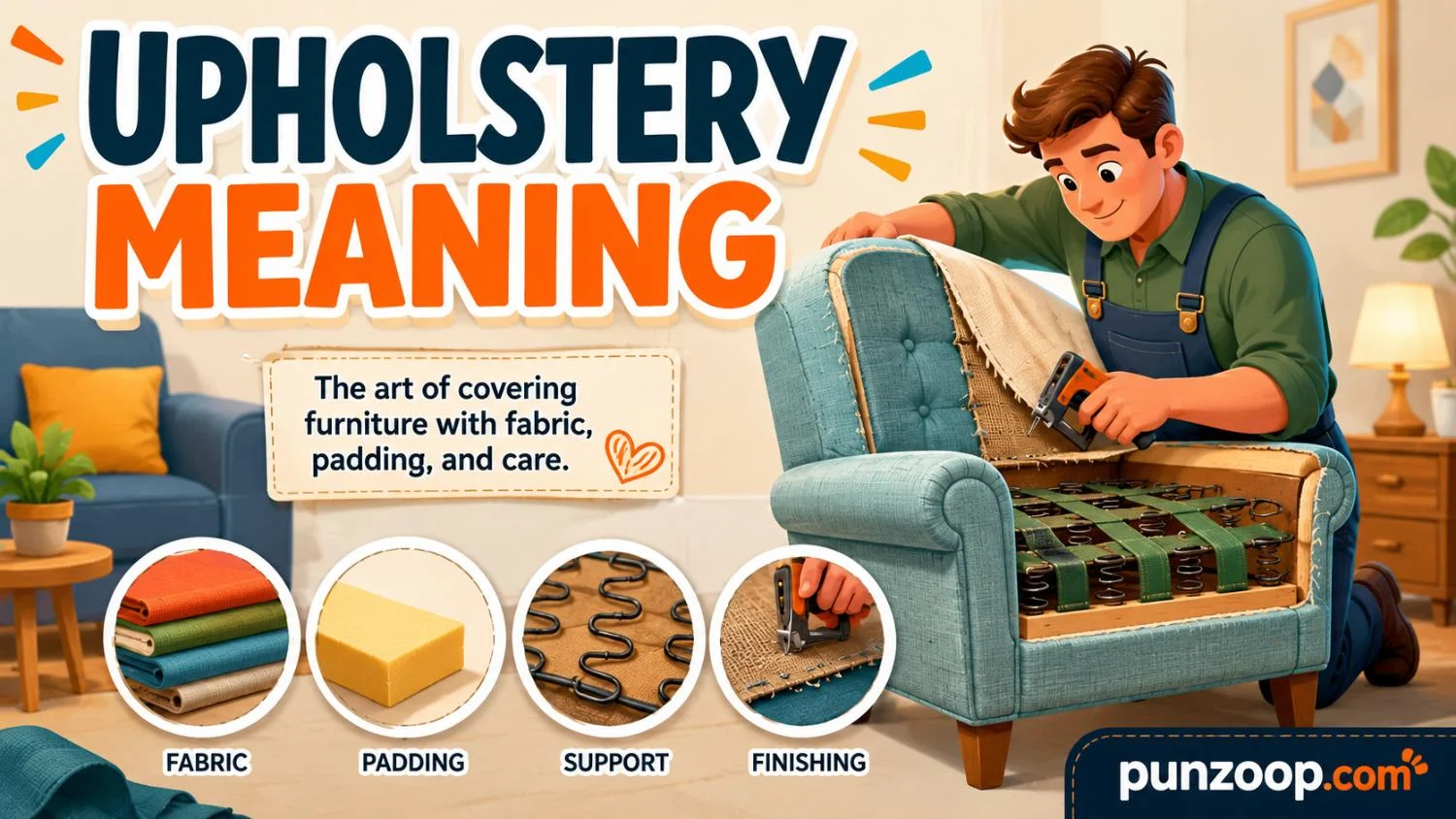
Upholstery meaning can make even a tired old chair sound a little more stylish! If you’ve ever wondered what upholstery really means, you’re in the right place. This quick guide breaks down the upholstery definition in simple, everyday language.
You’ll learn what upholstery means, what it covers, common examples, and where you’ll see it around the home. From sofas and armchairs to dining chairs and car seats, upholstery is all about adding comfort, covering, and character.
By the end, upholstery meaning will feel anything but confusing. Let’s pull back the fabric and uncover the details.
📌 What Is upholstery meaning? (The Simple Definition)
Let’s start with the basics. In the simplest terms, upholstery refers to the materials — such as fabric, padding, springs, and webbing — used to provide a soft, comfortable, and durable covering for furniture like sofas, chairs, and headboards. It also refers to the craft or trade of fitting these materials onto furniture frames.
“Upholstery is the art of giving furniture both comfort and character it’s where craftsmanship meets everyday living.”
So, when someone asks “what does upholstery mean,” the short answer is this: it’s both a noun (the actual materials on a piece of furniture) and can describe the process of covering and padding furniture frames to make them functional and attractive.
Quick Dictionary-Style Definition
| Term | Meaning |
| Upholstery (noun) | Textile coverings, padding, and springs used to cover chairs, sofas, and other furniture |
| Upholsterer (noun) | A skilled person who fits, repairs, or replaces upholstery on furniture |
| Upholster (verb) | The act of fitting a piece of furniture with padding, springs, webbing, and fabric |
📖 The Origin and History of the Word “Upholstery”
Understanding the origin of upholstery helps us appreciate why this craft has stood the test of time. The word actually comes from the Middle English term “upholder,” which referred to a tradesperson who repaired, refurbished, or sold small household goods, including furniture.
Over centuries, “upholder” evolved into “upholsterer,” and the craft itself became known as upholstery. Historically, this trade wasn’t just about comfort — it was a symbol of status and wealth. In medieval and Renaissance Europe, only the wealthy could afford padded, fabric-covered furniture. Ordinary households used hard wooden benches and stools. 👑
As textile production advanced and the middle class grew, upholstered furniture slowly became accessible to more people. By the 18th and 19th centuries, upholstery had become a respected craft, with skilled upholsterers using horsehair, cotton, and coil springs to create the plush furniture we associate with Victorian-era homes.
Timeline of Upholstery Evolution
- Medieval Period: Simple padded seats reserved for royalty and nobility
- 17th Century: Introduction of stuffed cushions using feathers and wool
- 18th Century: Rise of professional upholsterers as a recognized trade
- 19th Century: Coil springs revolutionize comfort and support
- 20th Century: Foam padding and synthetic fabrics become widely used
- Today: Eco-friendly, sustainable, and smart-fabric upholstery trends emerge
This journey shows that upholstery meaning isn’t just about fabric — it’s tied to centuries of craftsmanship, cultural shifts, and design innovation.
🧵 What Does upholstery meaning Actually Include?
Now that we understand the definition and history, let’s look at what actually makes up upholstery. It’s not just the fabric you see on the surface there are multiple hidden layers working together.
The Core Components of Upholstery
- Frame: The skeleton of the furniture, usually made of wood or metal
- Webbing: Strips of strong material stretched across the frame for support
- Springs: Coil or zigzag springs that provide bounce and structure
- Padding: Foam, cotton, or fiber layers that add softness
- Fabric or Leather: The outer covering that gives furniture its final look
- Trims and Details: Buttons, piping, and stitching for aesthetic finishing
Each of these layers plays a role in the overall comfort and durability of a piece of furniture. Skip one, and the whole structure suffers. That’s why professional upholstery work involves so much more skill than simply stretching fabric over a chair. 🧠
🪑 Types of Upholstery You Should Know About
Not all upholstery is created equal. Depending on the furniture, purpose, and material used, there are several distinct types worth knowing.
upholstery meaning:
1. Fabric Upholstery
This is the most common type, using woven textiles like cotton, linen, velvet, or polyester blends. It’s soft, versatile, and available in countless colors and patterns. 🎨
2. Leather Upholstery
Known for its durability and classic appeal, leather upholstery is often used for premium sofas, office chairs, and car seats. It ages beautifully but requires proper care.
3. Faux Leather / Vegan Upholstery
A cruelty-free and budget-friendly alternative to real leather, faux leather has become increasingly popular thanks to improved manufacturing techniques that mimic the real texture.
4. Outdoor Upholstery
Made with weather-resistant, UV-protected fabrics, this type is designed for patio furniture, garden chairs, and outdoor lounges that face sun and rain.
5. Automotive Upholstery
Specifically designed for car interiors, this type focuses on durability, stain resistance, and comfort during long drives.
| Type | Best For | Durability |
| Fabric | Living room sofas, chairs | Medium |
| Leather | Premium furniture, offices | High |
| Faux Leather | Budget-friendly furniture | Medium-High |
| Outdoor Fabric | Patios, gardens | High (weather-resistant) |
| Automotive | Car seats and interiors | Very High |
🌿 Common Materials Used in Upholstery
The choice of material greatly impacts how furniture feels, looks, and lasts. Here are some of the most widely used upholstery materials today:
- Cotton: Breathable and soft, but prone to wrinkling
- Linen: Elegant and natural, though it can stain easily
- Velvet: Luxurious texture, popular in modern interior design
- Polyester: Affordable, durable, and stain-resistant
- Leather: Long-lasting and easy to clean
- Microfiber: Extremely durable and pet-friendly
Choosing the right material depends on your lifestyle. For example, if you have kids or pets, a stain-resistant fabric like microfiber or polyester blend might be a smarter choice than delicate silk or linen. 🐾
Upholstery meaning in car
Upholstery meaning in car refers to the materials used to cover and finish the vehicle’s seats and other interior surfaces.
It commonly includes fabric, leather, vinyl, or synthetic materials fitted over seats, door panels, headrests, and sometimes the dashboard.
Car upholstery provides comfort while also contributing to the vehicle’s interior appearance and overall style.
For example, a car with leather seats has leather upholstery, while cloth seats have fabric upholstery.
When someone says their car needs new upholstery, they may mean the existing interior covering is damaged, worn, stained, or torn.
Upholstery can also be cleaned, repaired, replaced, or customized depending on the vehicle and the owner’s needs.
Upholstery meaning in housekeeping
In housekeeping, upholstery meaning generally refers to the fabric or other covering found on padded furniture and similar household items.
Housekeeping staff may care for upholstered sofas, chairs, cushions, headboards, and other fabric-covered furnishings.
Cleaning upholstery usually requires methods suited to the specific material because excessive moisture or harsh products can cause damage.
Regular vacuuming and spot cleaning can help remove dust, crumbs, stains, and other everyday dirt from upholstered surfaces.
In hotels and other properties, keeping upholstery clean is part of maintaining a neat and comfortable environment.
The term therefore relates not only to the material itself but also to the cleaning and maintenance of upholstered furnishings.
Upholstery meaning in English
Upholstery meaning in English is the material used to cover furniture or vehicle interiors, usually over padding or cushioning.
The word can describe both the finished covering and, depending on context, the work involved in covering or restoring padded items.
Common upholstery materials include fabric, leather, vinyl, and various synthetic textiles.
You might hear the word when discussing sofas, chairs, car seats, benches, or other padded surfaces.
For instance, saying that a sofa has worn upholstery means its outer covering has become damaged or visibly aged.
In simple terms, upholstery is the covering and cushioning finish that makes padded furniture or interiors more comfortable and presentable.
Upholstery meaning pronounce
Upholstery is pronounced approximately “uh-PHOL-stuh-ree” in common English speech.
The main stress falls on the second syllable, making the word easier to recognize when spoken aloud.
The pronunciation can sound slightly different between British and American speakers, but the word remains readily understandable in both varieties of English.
It is important not to pronounce every written letter as the spelling can make the word look more complicated than it sounds.
When learning the word, saying it slowly as “uh-PHOL-stuh-ree” can help build a natural pronunciation.
Once spoken more quickly, it generally sounds like a smooth four-syllable word rather than following its spelling letter by letter.
Sofa upholstery meaning
Sofa upholstery meaning refers to the fabric, leather, or other material covering the padded parts of a sofa.
It usually covers areas such as the seat, backrest, arms, and sometimes removable cushions.
The upholstery protects the underlying padding and frame while giving the sofa its color, texture, and overall appearance.
Different sofas may use materials such as cotton blends, linen, velvet, leather, microfiber, or synthetic fabrics.
If a sofa is described as needing reupholstery, it usually means its existing covering will be removed and replaced with new material.
Choosing suitable sofa upholstery depends on factors such as appearance, durability, comfort, cleaning requirements, and everyday use.
Upholstery meaning in furniture
Upholstery meaning in furniture refers to the covering and padding used on pieces such as sofas, armchairs, dining chairs, and ottomans.
It normally consists of an outer material placed over cushioning and attached to a supporting frame.
Furniture upholstery can be made from fabric, leather, vinyl, or other materials designed for interior use.
Besides improving comfort, upholstery gives furniture much of its visual character through its color, pattern, texture, and finish.
Damaged or outdated upholstery can sometimes be replaced without replacing the entire furniture frame.
This process, known as reupholstering, can give an older or worn piece of furniture a refreshed appearance.
Re upholstery meaning
Re upholstery meaning refers to the process of removing old upholstery and covering a piece of furniture with new material.
The process may involve taking off the existing fabric, inspecting the padding and frame, and fitting replacement material.
Reupholstery is commonly used for sofas, chairs, dining seats, and other upholstered furniture that remains structurally sound.
It can change the furniture’s appearance while allowing the original frame or design to be retained.
The term is often written as reupholstery, although people may informally describe the work as “re-upholstering” furniture.
In simple terms, reupholstery means giving upholstered furniture a new outer covering, often along with repairs or replacement padding when needed.
Upholstery meaning in Chinese
Upholstery meaning in Chinese generally refers to the padded covering or material used on furniture and vehicle interiors.
A common Chinese translation is “室内装潢” in some contexts, while furniture upholstery is more specifically expressed with terms such as “家具软包” or “软体家具面料”, depending on the situation.
The most appropriate translation can therefore change according to whether the subject is furniture, cars, or upholstery work.
For example, car upholstery may be described using Chinese terms related to vehicle interior coverings and materials.
When discussing sofas and chairs, the focus is usually on the fabric, leather, padding, and finishing applied to the furniture.
Understanding the context is important because there is no single Chinese word that perfectly matches every use of the English term “upholstery.”
🔨 Why Upholstery Matters More Than You Think
Upholstery isn’t just about appearances — it directly affects comfort, furniture lifespan, and even health. Here’s why it truly matters:
1. Comfort and Support
Good upholstery ensures proper cushioning and spinal support, especially important for furniture used daily like sofas and office chairs.
2. Aesthetic Appeal
The right upholstery transforms a plain wooden frame into a stylish centerpiece that complements your home’s interior design.
3. Furniture Longevity
Quality upholstery work can extend a furniture piece’s lifespan by years, saving money in the long run compared to constantly buying new furniture.
4. Health and Hygiene
Certain upholstery fabrics resist allergens, dust mites, and bacteria, making them a healthier choice for households with allergies. 🤧
🧰 DIY Upholstery vs. Professional Upholstery
Many people wonder whether they should attempt reupholstering furniture themselves or hire a professional. Both options have their pros and cons.
DIY Upholstery
- ✅ Budget-friendly for small projects
- ✅ Great creative outlet and learning experience
- ❌ Time-consuming for beginners
- ❌ Higher risk of uneven results
Professional Upholstery
- ✅ Expert finish and long-lasting results
- ✅ Access to high-quality materials and tools
- ❌ Higher upfront cost
- ❌ May require waiting time for scheduling
If you’re working on a simple stool or small chair, DIY can be a fun weekend project. But for valuable antiques or large sofas, it’s usually best to trust a professional upholsterer. 🧵
💰 Factors That Affect Upholstery Cost
The cost of upholstery work can vary widely depending on several factors:
- Type of furniture: A single chair costs less than a full sectional sofa
- Material chosen: Leather and velvet typically cost more than basic cotton blends
- Labor complexity: Intricate designs with tufting or piping require more skill and time
- Condition of the frame: Damaged frames may need repair before reupholstering
- Location and experience: Rates vary between regions and upholsterer expertise levels
On average, reupholstering a single armchair might cost significantly less than a full three-seater sofa, so it’s always smart to get multiple quotes before committing. 💡
🧼 How to Care for Upholstered Furniture
Once you’ve invested in beautiful upholstery, proper care ensures it stays looking fresh for years. Here are some simple but effective tips:
- Vacuum regularly to remove dust and debris from fabric fibers
- Rotate cushions to ensure even wear over time
- Treat stains immediately using appropriate cleaning solutions
- Avoid direct sunlight to prevent fading and material weakening
- Use fabric protectors for added stain resistance
- Professionally clean upholstery at least once a year
Taking these small steps consistently can make a huge difference in how long your furniture stays looking brand new. ✨
🌱 upholstery meaning: Modern Trends in Upholstery
The upholstery world isn’t stuck in the past — it’s constantly evolving with new trends shaping how furniture looks and feels today.
Sustainable and Eco-Friendly Fabrics
More manufacturers are turning to recycled fibers, organic cotton, and plant-based leather alternatives to reduce environmental impact. 🌍
Bold Colors and Textures
Interior design trends are shifting away from plain neutrals toward rich jewel tones, textured bouclé, and statement velvet pieces.
Smart and Technical Fabrics
Stain-resistant, water-repellent, and even temperature-regulating fabrics are becoming increasingly popular, especially for busy households.
Modular and Customizable Designs
Homeowners increasingly want upholstery options that let them mix and match colors, textures, and configurations to suit their personal style.
🏠 Upholstery in Interior Design
Beyond individual furniture pieces, upholstery meaning extends into the broader world of interior design. It plays a critical role in setting the tone of a room whether cozy and rustic, sleek and modern, or luxurious and formal.
Designers often start with a room’s upholstery choices before selecting wall colors or décor, since fabric texture and color heavily influence the overall mood of a space. If you’re exploring more about furnishing your home thoughtfully, you might also enjoy reading our related guide on Interior Design Basics for additional inspiration.
FAQs:
1. What is the simplest upholstery meaning?
Upholstery simply means the fabric, padding, and materials used to cover and cushion furniture, or the craft of applying these materials to furniture frames.
2. Is upholstery only about fabric?
No. While fabric is the visible part, upholstery also includes springs, webbing, padding, and the frame structure underneath.
3. How often should furniture be reupholstered?
It depends on usage, but most furniture benefits from reupholstering every 7–15 years, depending on material quality and daily wear.
4. Can I reupholster furniture myself?
Yes, small projects like stools or simple chairs are beginner-friendly, but larger or antique furniture is best left to professionals.
5. What’s the difference between upholstery and slipcovers?
Upholstery is permanently attached to the furniture frame, while slipcovers are removable fabric covers placed over existing upholstery for a quick style change.
🎯 Conclusion:
So, what have we learned? upholstery meaning goes far beyond a simple dictionary definition. It represents centuries of craftsmanship, comfort, and creativity that continue to shape how we experience our homes every single day. From ancient padded thrones to today’s eco-conscious fabric innovations, upholstery has always been about blending function with beauty. 🛋️
Whether you’re choosing new furniture, considering a DIY reupholstery project, or simply satisfying your curiosity about the word itself, understanding upholstery gives you a deeper appreciation for the furniture surrounding you every day.