

When your vehicle is out of warranty, even a minor repair can turn into an expensive headache. Dealerships often charge hundreds of dollars for replacement mirrors, electronic modules, and factory radios, even when the car itself is only worth a few thousand.
Used OEM auto parts offer a smarter way to save money without compromising factory fit or compatibility. The key is choosing a reliable seller that carefully inspects its inventory, provides clear condition details, and backs its parts with a reasonable warranty. Below, we explore five trusted options for finding affordable used OEM parts, whether you prefer the convenience of online retailers or the hands-on savings of a self-service salvage yard.
How Long Does a Car Battery Last in Hot and Cold Weather?
Most conventional car batteries last around three to five years, although actual lifespan depends on climate, driving habits, vibration, and maintenance. According to AAA Automotive, heat can accelerate battery deterioration, while frequent short trips may prevent the battery from fully recharging. These factors explain why an older battery can fail even when it appeared to work normally the previous day.
Temperature affects battery performance in different ways. Hot weather speeds up internal chemical degradation and can contribute to fluid loss in certain battery designs. Cold weather slows the chemical reactions that produce electrical power while making the engine harder to crank. A battery weakened by summer heat may therefore show its first obvious symptoms on a cold morning.
Several everyday habits can influence how long your battery remains dependable:
- Frequent short journeys: Repeated trips may not give the charging system enough time to replenish the energy used during starting.
- Long periods without driving: A parked vehicle can gradually lose battery charge because of normal self-discharge and electrical systems that continue drawing power.
- Excessive vibration: A loose battery hold-down can allow movement that damages internal components over time.
- Extreme temperatures: Prolonged heat accelerates aging, while cold conditions expose weaknesses in an already deteriorated battery.
- Delayed maintenance: Corroded terminals, poor connections, and charging-system faults can contribute to starting problems.
A practical approach is to have your battery tested regularly once it reaches approximately three years of age, particularly before periods of extreme weather. A professional load or conductance test can help determine whether it still has sufficient starting capacity.
Do not replace a battery based on age alone. Some batteries last longer than five years, while others deteriorate sooner. Testing its condition and checking the vehicle’s charging system provide a more reliable basis for deciding when replacement is necessary.
Does Your Car Need a New Battery or an Alternator Repair?
A car that will not start does not automatically need a new battery. The battery stores electrical energy, while the alternator generally supplies electricity and recharges the battery when the engine is running. A fault in either component can produce similar symptoms, so identifying the underlying problem can prevent unnecessary replacement costs.
Here is how common symptoms can help narrow down the cause:
- The engine cranks slowly or only clicks: A discharged or deteriorated battery is one possibility, but corroded terminals, loose connections, or a starter problem can cause similar symptoms.
- The battery repeatedly goes flat: The battery may no longer hold a charge, or the vehicle may have a charging fault or excessive electrical drain while parked.
- The battery warning light stays on while driving: This can indicate a problem with the charging system, alternator, wiring, or related components. Arrange an inspection promptly.
- Headlights dim or electrical systems behave erratically: These symptoms may indicate unstable electrical supply, poor connections, battery trouble, or a charging-system fault.
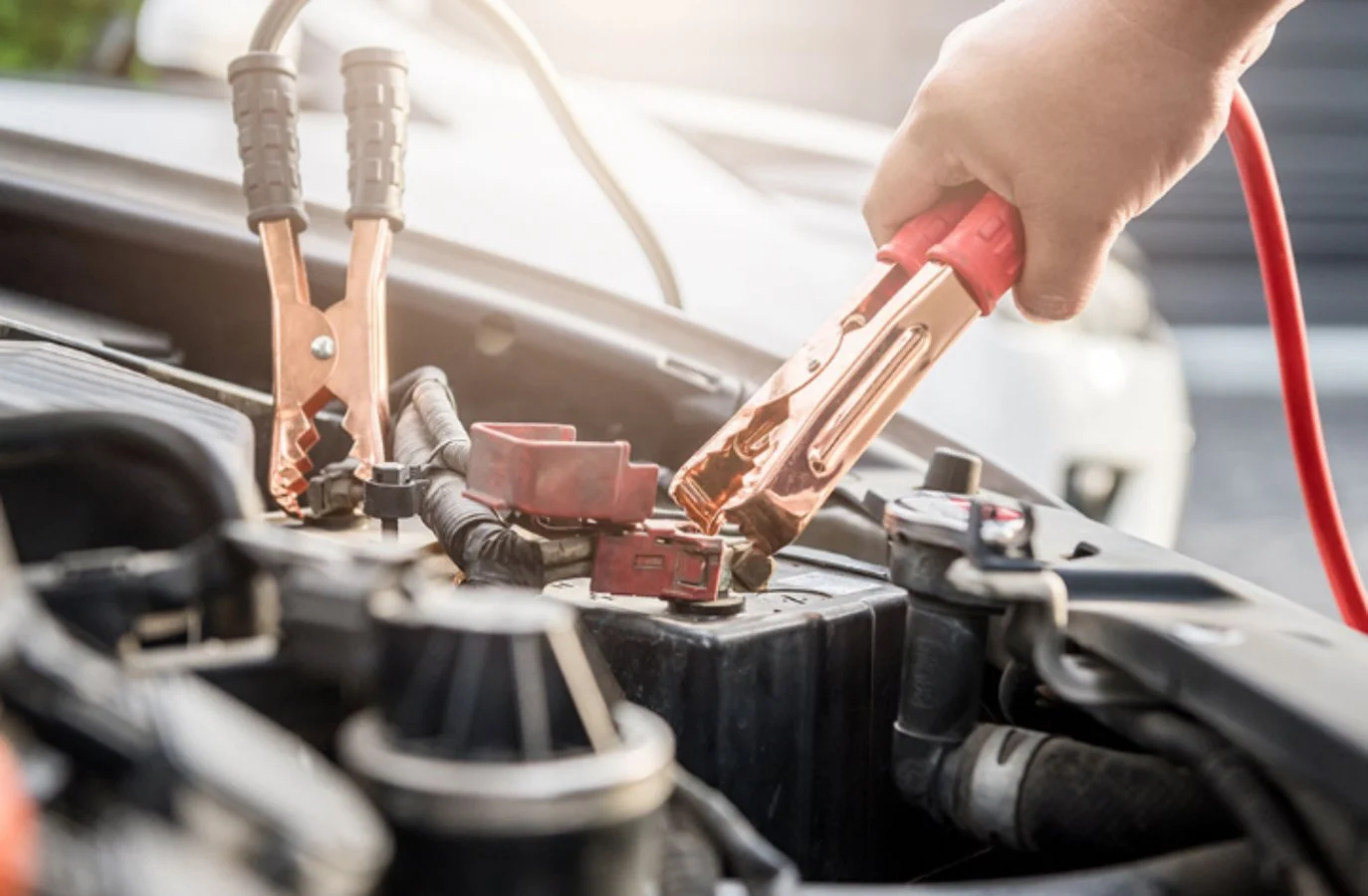
- The car starts with a jump but fails again later: A jump-start restores enough power to start the engine, but it does not prove the battery is healthy or that the alternator is charging correctly.
A sensible diagnostic process starts with inspecting the battery terminals and cables, followed by a battery health test and a charging-system check. A mechanic can also test for parasitic electrical drain if the battery loses charge while the car is parked.
Avoid relying on a single voltage reading to decide whether a battery needs replacement. A battery can show a reasonable resting voltage yet fail under starting load. Likewise, a recently discharged battery may need proper recharging and retesting before its condition can be assessed accurately.
If the battery case is swollen, cracked, leaking, or unusually hot, do not attempt a jump-start. Keep away from the battery and seek professional assistance. When the problem occurs on the road, contact a qualified roadside service, such as KP Towing LLC’s jump-start service, for help getting the vehicle assessed safely.
🔋 Battery Trouble: How to Check It and Spot the Symptoms
Car battery trouble can show up at the worst possible time, like when you’re running late for work or heading out on a road trip. One of the first warning signs is a slow engine crank, where the engine takes longer than usual to start. You might also notice dim headlights, flickering dashboard lights, or electrical accessories that aren’t working properly. A battery warning light on your dashboard can indicate a charging-system problem, so don’t ignore it. Corrosion around the battery terminals or loose connections can also cause starting issues. If your car repeatedly needs a jump-start, have the battery and charging system tested instead of assuming the battery is the only problem. Catching these signs early can help you avoid getting stranded and make your next drive a lot less stressful.
Real-world fact: Most car batteries last around 3–5 years, although climate, driving habits, and maintenance can affect their lifespan. AAA recommends watching for warning signs and arranging a battery test before a minor issue becomes a roadside emergency.
The key takeaway:
Test before replacing. Identifying whether the fault comes from the battery, alternator, starter, wiring, or an electrical drain can save money and reduce the chance of another unexpected breakdown.